



Your team is down one round. Money is on it. Your hands are clammy, your chest is tight, and you haven’t touched your drink because your stomach won’t cooperate. You’re not even playing: you’re watching. And yet your body is in full crisis mode. The physical things that happen to your body during highly competitive matches hit spectators just as hard as players when a bet is riding on the outcome. Your nervous system does not care about the couch.

Alt text: two men watching a match
Caption: You can expect to have a physical reaction when you watch an important match.
Understanding What Happens to Your Body During Highly Competitive Matches
The nervous system cannot tell the difference between a real threat and a deeply felt one. When you’ve placed a bet and the scoreline turns against you, your brain treats that financial and emotional pressure exactly like danger. The sympathetic nervous system fires, flooding your bloodstream with adrenaline and cortisol in seconds. Your heart rate spikes. Your muscles tense with nowhere to put that tension. Your digestive system slows because your brain has decided this is not the moment for that. This response is involuntary, but once you learn more about what happens to your body during highly competitive matches, you can learn how to control your reaction.
Why Does Your Heart Pound Even Before the Match Starts?
Anticipation alone is enough to activate a stress response. From the moment a match you’ve bet on begins, or even in the hour before, your brain is running threat simulations. What if they throw the first round? What if the connection drops? Heart rate can climb 30–50 beats per minute before a single kill or point is registered. Understanding how adrenaline affects your game breaks down why this pre-match hormone surge alters your perception and emotional regulation before the action even starts.
What Happens to Your Hands While You Watch?
Adrenaline redirects blood flow toward large muscle groups to prepare the body for physical action it will never take. Your hands lose that circulation. They cool. They shake. If you’re holding your phone or gripping anything during a tense sequence, you feel it. Your hands are primed for a fight your body is not having, and none of this is an overreaction.
Why Do Your Hands Shake at the Worst Possible Moment?
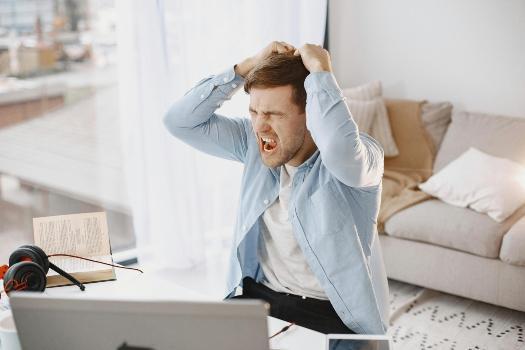
Muscle tremor happens when adrenaline overstimulates your motor neurons: they fire faster and less precisely than normal. For a spectator with money on the line and feeling a lot of pressure, this peaks during the closest moments: a 1v1 clutch, a final round, a comeback that shouldn’t be happening. Your body is vibrating with readiness for action it cannot take.

Alt text: a dark-haired man looking frustrated
Caption: Common reactions include hand shaking and tunnel vision.
The Physical Things That Happen Mid-Match
Once a match is live, the stress response doesn’t plateau: it rolls with every momentum swing. Your team takes a commanding lead and tension drops slightly. The opponent claws back three rounds and adrenaline surges again. Each swing compounds. By the final rounds of a close match you’ve bet on, your body has been running stress hormones for an hour. Some people go numb. Others feel a tight pressure in their chest they can’t shake. Both are normal.
When It Starts to Feel Like a Mini Panic Attack
For some spectators during the worst moments, a sudden reverse, a missed clutch, overtime in a match that was supposed to be safe, the stress response floods. Heart racing, breathing shallow, a creeping sense something is very wrong, thoughts that loop and won’t settle. This is the sympathetic nervous system near maximum output, and it can feel almost indistinguishable from a panic attack even though what’s on the line is a bet. Be sure to understand what to do when your body overreacts. The reset techniques that work for panic responses also work for these match-triggered surges because the underlying physiology is the same.
What Happens to Your Vision During a Tense Match?
Under serious stress, your visual field narrows: tunnel vision. Your nervous system locks attention on the perceived threat and filters out everything peripheral. When you’re deep into a bet and the scoreline is teetering, you may find yourself staring at the screen with an uncomfortable, almost locked-in intensity. The room disappears. Ambient sound drops away. This is not focus in any useful sense. It is threat fixation dressed up as concentration.
Does Stress Actually Change What You See on Screen?
Yes. Pupils dilate under adrenaline, sharpening central vision briefly. At moderate arousal, this can make you feel sharper. But at high arousal, money on the line, a match going wrong, you miss context, misread the situation, and project outcomes that aren’t certain yet. The tunnel is real, and it has walls.

How Your Gut Literally Reacts to the Match
“Butterflies” is a real physiological event. The gut-brain axis is a two-way neural highway between your digestive tract and your brain. When stress hormones fire, the brain signals the gut to slow down, and the gut sends distress signals back: that hollow, churning, slightly nauseous feeling during a high-stakes moment. Research from the NIH on the gut-brain stress response confirms the gastrointestinal response to psychological stress is as measurable as the cardiac one.
Working With Your Body, Not Against It
The best spectators are not the ones who feel less during a match. They are the ones who recognise what their body is doing and don’t add panic on top of panic. The secondary spiral, getting stressed about being stressed, reading your own symptoms as bad omens, is often worse than the original response.
Can You Actually Dial the Reaction Down Mid-Match?
Yes. Slow exhales activate the parasympathetic nervous system, the brake pedal to adrenaline’s accelerator. Even two or three deliberate breaths during a pause in the action can reduce heart rate and ease chest tightness.

Alt text: a man closing his eyes and covering his face in frustration
Caption: Some breathing techniques can help calm your nervous system.
Your Body Is Invested Whether You Are or Not
The physical things that happen to your body during highly competitive matches do not require a controller in your hands. When money and attention are riding on the outcome, your nervous system treats it as a real event, because to the parts of your brain that evolved to keep you alive, it is. Your body is in the game whether you are or not.