



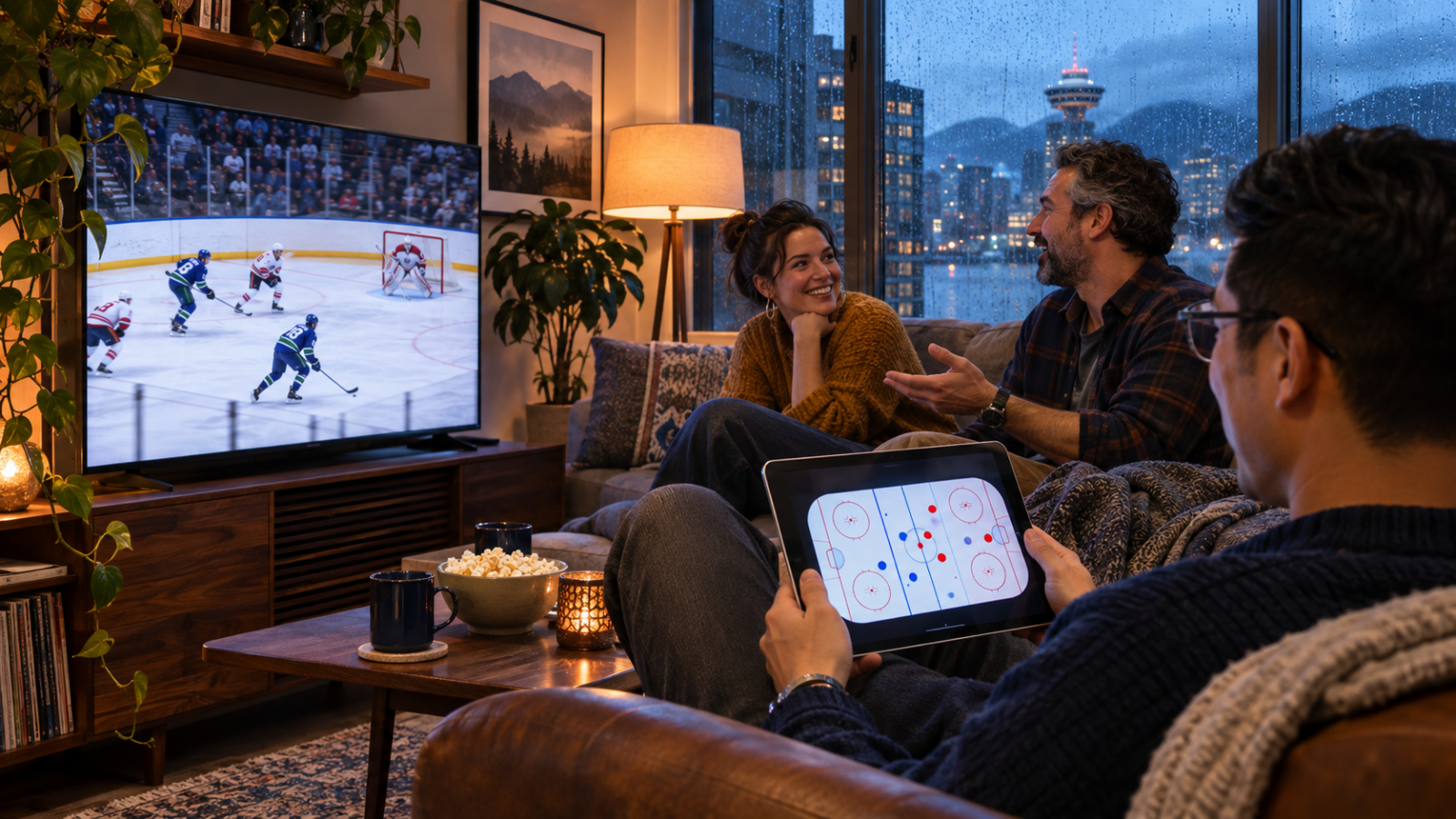

Watching sport in Canada increasingly means following more than the main broadcast. A television carries the game while a phone supplies a lineup update, a friend’s reaction or a statistic that explains the last possession. The appeal is participation: viewers can investigate a question immediately instead of waiting for the next studio segment.
Heading into 2027, that habit should be understood as several different activities rather than one universal trend. A hockey supporter checking shift information has a different purpose from a football fan messaging relatives across provinces. Better coverage makes room for both without assuming that everyone wants another uninterrupted stream of alerts.
Give each screen a useful job
An adult viewer opening 1mlnbet login during a game can make the experience more orderly by keeping account access separate from the main viewing screen and checking the intended website before entering details. For the wider evening, a simple division works well: one screen for the action, another for the information genuinely worth consulting.
That matters in Canada because schedules overlap across time zones. A late Western game may be the main event in Vancouver and background viewing for someone in Montréal preparing for the next morning. Notification preferences should reflect that reality. Following every update is not the same as enjoying more sport.
Statistics can enrich the broadcast when they answer a specific question. Shot location can explain why a goalkeeper faced a difficult period; possession data can show whether a team controlled territory without creating chances. A number is most useful when it clarifies what happened rather than competing with the game for attention.
A more comfortable second-screen setup
· Choose one reliable score source to avoid conflicting alerts.
· Mute notifications that reveal results ahead of the broadcast.
· Keep statistics relevant to the sport and the question being considered.
· Agree on spoiler rules in group chats with viewers on different feeds.
· Set a stopping point so a late game does not become an endless scroll.
Broadcast delay deserves particular care. A streamed feed, television signal and live-data service may not arrive together. An alert can therefore reveal a goal before the viewer sees the build-up. For live betting, the same mismatch means the picture on a screen should never be assumed to represent the exact current state used by a market.

Connection works better than constant interruption
Group conversations remain one of the strongest reasons to use another device. A supporter away from home can share a game with friends in another province, while a family can keep a familiar matchday ritual despite different schedules. The value comes from the people involved, not the volume of messages produced.
Accessible design also matters. Captions, readable score graphics and uncluttered mobile pages can make coverage easier to follow. A second screen sometimes supplies information the main feed presents poorly, which means publishers should improve the primary experience rather than assuming an extra device solves every problem.
The NHL’s official schedule provides a useful starting point for planning a hockey evening. Checking the listed time zone avoids a common source of confusion when a Canadian club travels, and leaves the phone available for information that adds something to the viewing experience.
For adults who include wagering in the evening, a fixed CAD limit and a clear end time help preserve that balance. The game remains worth watching without an additional decision after every play. Canada’s second-screen shift is most attractive when it makes live sport more understandable and more social while leaving enough attention for the moment everyone tuned in to see.