



Most of us have a game we open without thinking about it. Waiting for a queue, killing ten minutes before a scrim, decompressing after a rough loss. For a lot of gamers, that game is solitaire. It’s easy to write off as mindless filler, the digital equivalent of doodling. But play it with any attention and you’ll notice it’s asking your brain to do things that feel oddly familiar if you spend a lot of time in ranked lobbies.
That’s not a coincidence. Solitaire and competitive gaming lean on a surprisingly similar toolkit: reading patterns, planning ahead, and staying level-headed when things get messy.
Reading the Board Like You’d Read an Opponent
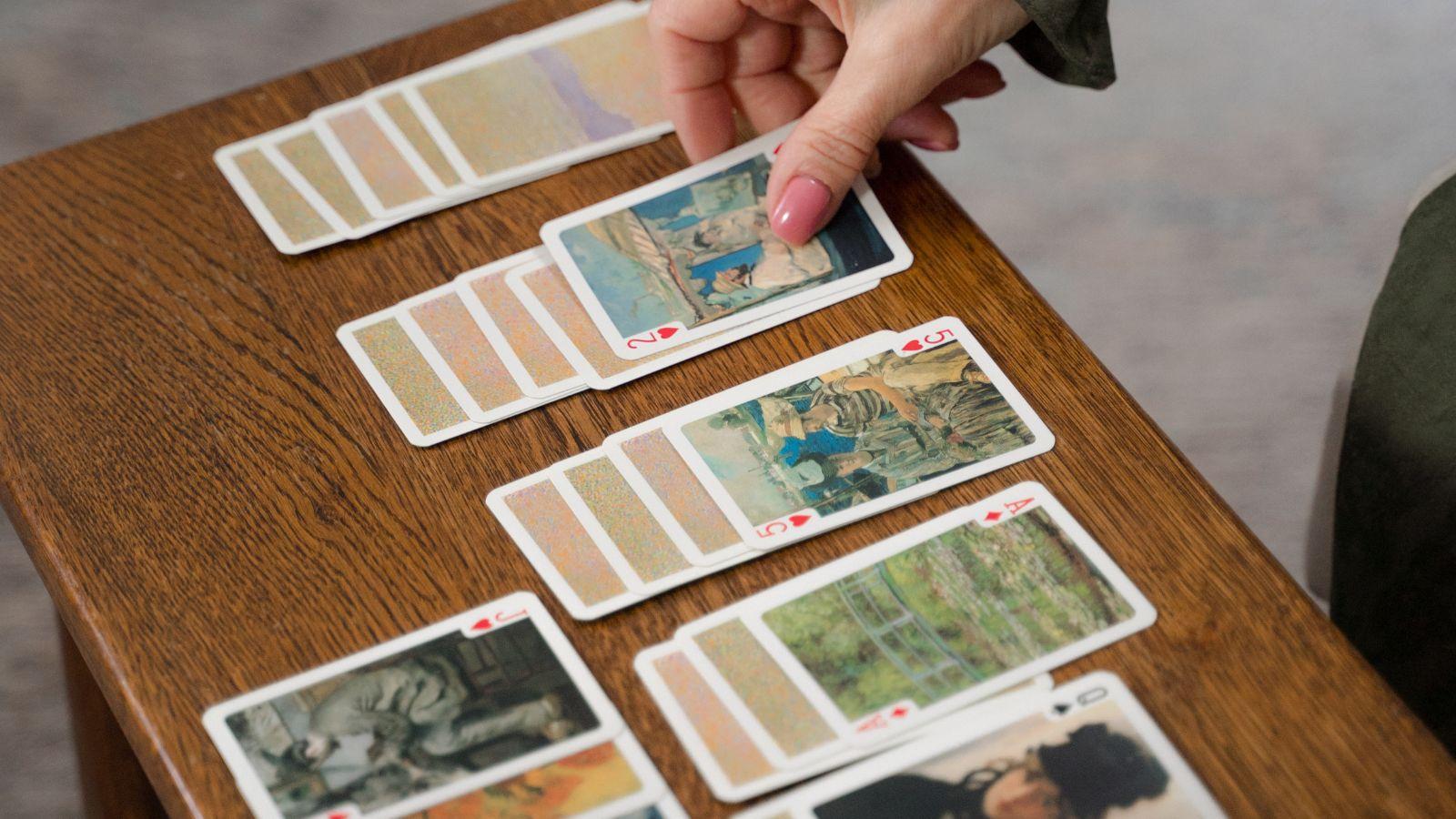
A solitaire tableau is a moving target. Cards get buried, sequences open up, and the board you’re looking at now won’t look the same in three moves. Anyone who’s put real hours into the game stops calculating every option from scratch and starts recognizing shapes instead: a dead-end configuration, a move that frees up three cards instead of one, a stack about to collapse into something useful.
That’s the same instinct that separates a good player from a great one in competitive titles. Nobody’s consciously tracking every pixel of an enemy’s movement in Valorant. They’re recognizing a pattern, a rotation, a setup, and reacting before it fully unfolds. There’s actual research behind this: a systematic review of esports and cognitive skill found that experienced FIFA players picked out previously seen sequences of play far more accurately than novices did. What’s interesting is the pattern recognition transferred more strongly one way than the other: skills built in FIFA carried over into real soccer better than the reverse carried over into FIFA.
Solitaire’s version of this is smaller and slower, but it’s the same muscle. You’re just training it against a deck of cards instead of a scoreboard.
Planning More Than One Move Ahead
Regular Klondike leans on luck more than people admit. FreeCell doesn’t give you that excuse. Every card is face up from the start, so if you get stuck, it’s on you. You didn’t plan far enough ahead.
That’s a familiar feeling if you play anything strategy-heavy. Managing cooldowns, resources, or positioning for a fight that’s still two rotations away means holding a picture in your head of where things are heading, not just where they are right now. Solitaire strips that down to its simplest form: every move changes what’s available next, so you’re always weighing a small loss now against a bigger opening later. It’s the same kind of forward thinking, just without a minimap.
It’s a decent way to keep that muscle warm on a day when you don’t have it in you to play a full ranked session but still want your brain doing something.
Staying Patient When There’s No Adrenaline to Ride
Competitive gaming rewards fast, locked-in focus. Reactions in fractions of a second, adrenaline doing a lot of the heavy lifting. That’s one kind of attention, and it’s not the only one worth having.
Solitaire trains something quieter: staying with a slow, low-stimulation task without your mind checking out or your patience running thin. That sounds minor until you think about how much tilt actually costs people in competitive games. A lot of it comes down to losing the ability to think clearly right after something goes wrong. Solitaire gives you a low-stakes way to practice staying calm on purpose, so it’s not the first time you’re trying to do it in a moment that actually matters.
What the Research Actually Backs Up
Worth being straight about this instead of dressing it up. Nobody’s run a study proving that playing solitaire makes you better at esports. That specific link hasn’t been tested, and it’d be a stretch to claim otherwise. But the surrounding research points in a supportive direction.
There’s a well-known study published in the New England Journal of Medicine that followed a group of older adults for several years and found that people who regularly did cognitively engaging leisure activities, including card and board games, had a measurably lower risk of developing dementia. Reading, playing an instrument, and playing games were all tied to better long-term cognitive outcomes.
Separately, researchers looking at professional esports players found real, measurable differences in brain response speed compared to non-players. Using EEG recordings, one study on competitive gamers found that pros had a faster, stronger brain response to stimuli than novices, plus quicker choice-reaction times. That’s solid evidence that competitive gaming trains the brain in ways you can actually measure.
Line those two things up and the case is simple enough, even without a single study connecting all the dots directly. Games that demand pattern recognition, planning, and sustained attention are linked to better cognitive outcomes over time. Competitive gaming already trains those same abilities. Solitaire asking for the same skills in a calmer, lower-stakes format is a reasonable way to keep that training ticking over, not a guaranteed performance boost with a research paper behind it.
Fitting It Into an Actual Gaming Routine
None of this means you should swap ranked play for card games. It’s more about what fills the gaps around your sessions. A few rounds before you queue up can work like a warm-up, getting your pattern recognition switched on before you need it. A few rounds after a rough loss streak can do the opposite job: give your brain something to focus on that isn’t tied to the match you just lost.
If you want somewhere to actually play, Internet Solitaire works well for this. It runs in the browser, no download, no account needed, so it fits into a five-minute break just as easily as a longer one between sessions.
The Takeaway
Solitaire isn’t the opposite of competitive gaming, it’s a quieter way of training some of the same things: spotting patterns before they fully form, planning ahead instead of reacting blind, and staying patient when the run isn’t going your way. It won’t replace grinding your main game. It’s just a decent habit to have running in the background.