



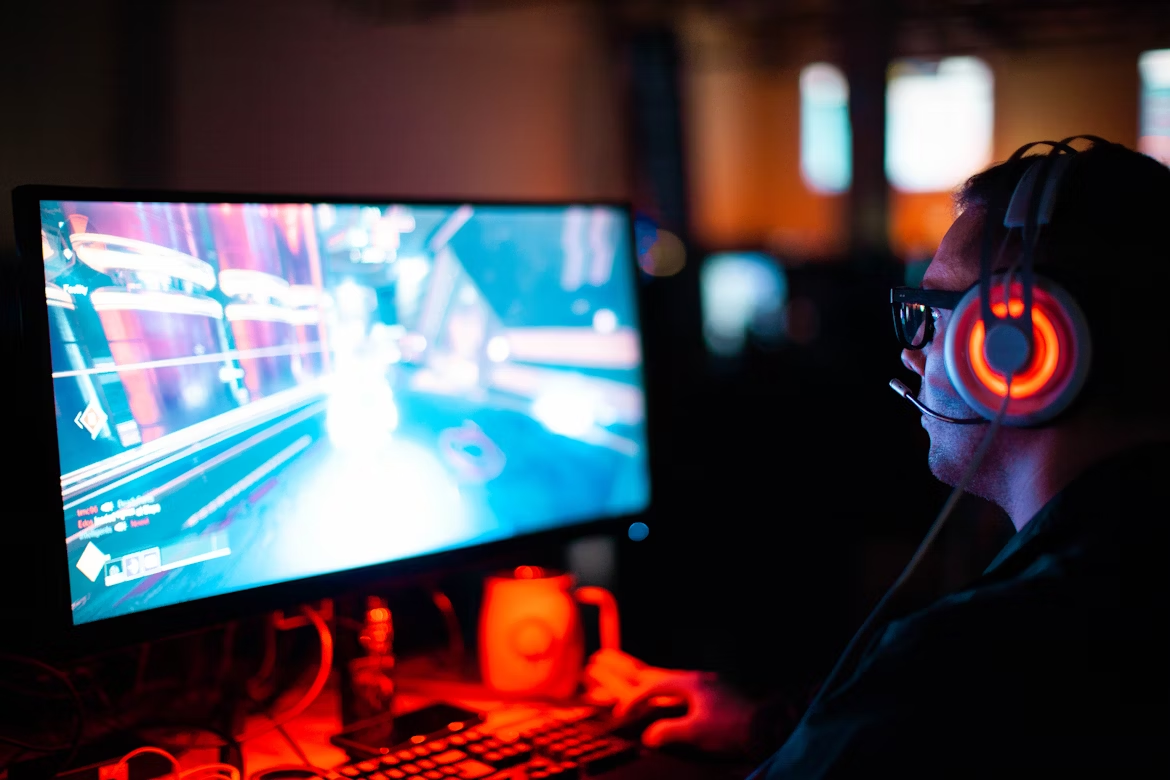

For years, gaming has been framed as thumbs on sticks, eyes on screens, and nothing else. That picture is outdated. A growing number of gamers are picking up guitars, not as a novelty or a side joke, but as a real extension of how they already think, learn, and unwind. This is not about abandoning games or chasing some retro fantasy. It is about how modern gaming culture naturally spills into music, creativity, and hands-on skill in a way that feels almost inevitable once you see it happening.
The overlap makes sense when you stop treating games and music as separate hobbies. They share timing, pattern recognition, repetition, and the satisfaction of slow mastery. Gamers already live in that mindset. The guitar just gives it a different outlet, one with strings instead of pixels.
The Skill Loop Feels Familiar
Gamers understand progression better than most. Start clumsy, fail a lot, improve in small chunks, then hit moments where everything suddenly clicks. Guitar learning follows the same rhythm. Chords feel impossible until they do not. Scales sound mechanical until they start flowing. That loop of effort and payoff mirrors the way players grind levels, learn mechanics, and refine muscle memory.
What surprises many new players is how natural the transition feels. Finger placement is not that different from learning button combinations. Timing matters. Mistakes are feedback, not failure. Gamers already know how to sit with frustration without quitting, because they have spent years doing exactly that on harder difficulties and longer campaigns.
There is also something deeply satisfying about watching progress stack up in real time. Calluses form, transitions smooth out, and suddenly a riff that felt unreachable last week feels almost automatic. That sense of earned momentum scratches the same itch as mastering a difficult game segment, except now the payoff is audible.
Gaming Setups Are Turning Musical
Another reason guitars are sneaking into gaming spaces is physical proximity. The modern gaming setup is already designed for comfort, repetition, and long sessions. Adding an instrument does not require a full lifestyle overhaul. A guitar leaning nearby on a guitar stand becomes an invitation rather than a commitment. Between matches or during downtime, it is easy to grab it and noodle for a few minutes.
This casual accessibility matters. When something is always within reach, it stops feeling intimidating. Practice no longer has to be formal or scheduled. It can happen organically, the same way gamers naturally experiment with settings, builds, or loadouts just to see what happens. The guitar becomes part of the environment, not a separate activity that demands its own headspace.
Streaming culture has helped too. Viewers are used to watching creators switch gears mid-session. One moment it is gameplay, the next it is a riff, a cover, or a jam. That blending makes picking up an instrument feel normal rather than niche, especially for audiences raised on hybrid content.
Music Games Opened the Door, Real Playing Walked Through It
For many gamers, music games were the first spark. Titles that focused on rhythm, timing, and pattern matching planted the idea that music could be interactive, not just something you listened to passively. Once that mental door opened, moving from plastic controllers to real strings did not feel like a leap. It felt like an upgrade.
What starts as curiosity often turns into something deeper. Players realize that real instruments offer endless variation and expression. There is no final level. No hard cap. Just more nuance the longer you stick with it. That open-ended nature appeals to gamers who have already exhausted completionist instincts and want something less contained.
The transition also reframes how players hear music. Songs stop being background noise and start sounding like systems. You notice structure, rhythm changes, and tonal shifts. Learning actual song lyrics alongside chords deepens that connection, turning familiar tracks into something you actively participate in rather than consume.
Control Without Pressure Matters More Than Ever
Modern gaming culture is intense. Ranked ladders, social comparison, constant updates, and performance metrics can wear people down. Guitar offers a different kind of control. You set the pace. You decide the goal. There is no algorithm judging your progress or leaderboard tracking your mistakes.

That autonomy is powerful. Gamers are used to systems that demand constant optimization. Music lets them step outside that loop without abandoning skill-based engagement entirely. You can chase precision or just play for the feel of it. Both are valid, and neither requires permission.
This balance appeals to people who want something grounding without being dull. Guitar asks for focus, but it does not punish you for stepping away. It fits into life rather than competing with it. For gamers who already spend hours refining performance, that shift can feel refreshing rather than limiting.
Identity Is Expanding, Not Replacing
Picking up a guitar does not mean gamers are leaving their identity behind. If anything, it broadens it. Creative expression has always lived inside gaming culture, from mods to fan art to music remixes. Playing an instrument simply moves that creativity into a physical space.
There is also a social aspect that feels familiar. Sharing clips, trading tabs, collaborating online, and learning from others mirrors how gaming communities already function. The language is different, but the structure is the same. People bond over progress, gear talk, and shared frustration that eventually turns into improvement.
A Different Kind of Win
At its core, the reason gamers are picking up guitars is simple. It feels good. It uses skills they already have while offering a new way to grow. It provides challenge without exhaustion and creativity without judgment. In a culture built around interaction and mastery, the guitar fits naturally, not as a replacement, but as an extension.

