



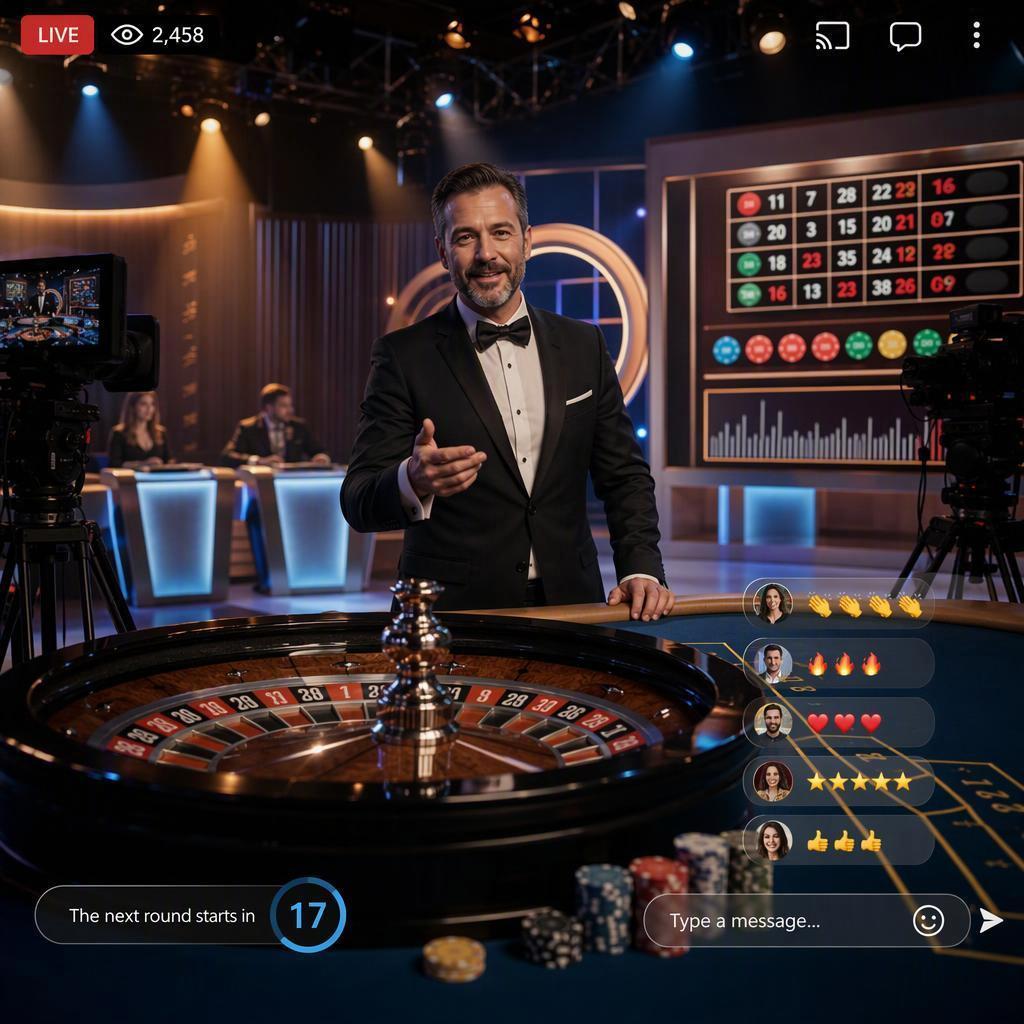

Live game shows have found a comfortable home online. Put a polished presenter in front of cameras, add a real table or wheel, bring in a fast-moving chat and let viewers follow each round as it happens, and you’ve got something that feels closer to a television programme than the old idea of a static gaming website.
That crossover is no accident. Streaming has changed what audiences expect from screen-based entertainment. We’re used to live reactions, on-screen graphics, presenters speaking directly to camera and the sense that something is happening right now. Live casino formats borrow those familiar ingredients, then build interactive play around them for adults who choose to take part.
For plenty of people, the appeal is simply the presentation. It’s less about staring at an interface alone and more about watching a host guide a room through a structured format. The result sits somewhere between studio entertainment, a hosted quiz format and online gaming.
From TV studios to browser screens
A modern live-hosted game is usually built much like a compact broadcast production. Rather than relying solely on animated visuals, it may use a physical roulette wheel, card table or game-show set inside a studio. Cameras are positioned to show the host, the game equipment and close-up moments that matter, such as card dealing or the wheel settling.
The technology behind it is doing quite a lot of quiet work.
The bits you don’t always notice
A typical live setup combines several moving parts:
-
Multiple camera angles, so viewers can see both the presenter and the action clearly
-
Live video feeds, transmitted to a browser or app
-
Real-time game data, which records actions and displays results on screen
-
Low-latency streaming, helping the picture and interactive controls stay in step
-
Moderation and support systems, particularly where chat features are available
Low latency matters more than people might think. If the video arrives too far behind the game controls, a viewer could be looking at a moment that has already passed. A smoother, closer-to-live feed helps make the format comprehensible, especially where there are short windows for participation.
The host’s role matters too. A good presenter keeps the pace clear, explains what is happening and gives the studio some warmth. It’s the same principle that makes a well-run television game show easy to watch: the audience should never be left wondering what comes next.
Of course, a glossy studio doesn’t remove the need for clear rules. Production values can make a format inviting, but viewers should still be able to find the game information, participation limits and help pages without hunting through menus.
The main live formats, without the jargon
Live casino isn’t one single thing. Different formats borrow different parts of television entertainment, and each has its own rhythm.
Live roulette
Live roulette is perhaps the clearest example of a physical casino table brought to a browser screen. A presenter stands by a real wheel, the camera focuses on the result, and the digital interface lets eligible users see available options before the round closes.
It’s visually straightforward, which is one reason it translates well to live video. You can understand the broad shape of a round by watching, even before learning every rule. Still, anyone considering participation should read the game rules carefully, as variations can differ between providers.
Live blackjack
Blackjack is more conversational by nature. The dealer’s actions are central, and the pace often leaves room for clear announcements as cards are dealt. On screen, the interface can display the current hand, available decisions and the table’s stated rules.
This is where the broadcast feel becomes particularly noticeable. Close-up camera work, a calm host and clear graphics can turn a familiar card-table format into something easy to follow from a sofa, train seat or lunch break, though it’s worth taking a proper break from screens too.
Live baccarat
Baccarat tends to feel more formal and streamlined. The host deals cards for the designated sides, while the platform displays the outcome and relevant round information. Its appeal for spectators is partly visual: the ritual of the deal, the neat layout of the table and the host’s concise commentary all lend themselves to camera coverage.
The important thing is not to confuse a polished presentation with certainty. Every game remains governed by its own rules and outcomes are not predictable.
Game-show-inspired rounds
Then there are the studio-heavy formats, designed with colourful sets, large wheels, multipliers, bonus-style sections and a presenter at the centre of it all. These often resemble a television game show more openly than traditional table games do.
Their entertainment design usually relies on anticipation between stages, camera cuts, sound cues and a host who can keep the room moving. Even so, the essentials should remain visible: how a round works, what choices are available, when the round closes and where to read the full terms.
Why it can feel surprisingly social
Watching a live host creates a sense of shared occasion. You know other people are viewing the same table or studio at the same time, even if everyone is sitting somewhere different.
That doesn’t mean it’s the same as being in a room with friends. But it does explain why live formats often feel less solitary than standard digital games.
Hosts set the tone
A capable host does more than read out results. They welcome viewers, narrate the steps, acknowledge the pace of the room and keep things understandable for newcomers. The best presentation is clear rather than overbearing. You should be able to watch for a few minutes and get a fair sense of the format.
Chat works best when it stays polite
Where chat is offered, it’s worth treating it as a public space. Keep comments respectful, avoid sharing personal details and don’t assume everyone wants conversation. Moderated chat can make a live room feel friendly; unmoderated noise can do the opposite.
A sensible rule of thumb is simple: say nothing in a live chat that you wouldn’t be happy to say aloud in a crowded venue.
Mobile design changes the viewing habit
Many people now watch live content on a phone, so interfaces need to make the essentials legible on a smaller screen. That means:
-
clear buttons and readable text;
-
visible round timers;
-
obvious access to rules and support;
-
manageable layouts that don’t bury key information;
-
controls for sound, video quality and notifications.
Spectator-friendly design matters here. Someone may want to watch the host and understand the format without immediately taking part. A platform that lets viewers find information easily and move at their own pace is generally more considerate.
What to check before using any live-play platform
A polished stream is nice, but it shouldn’t be your only test. If you are legally eligible and decide to explore a live-play service, take a few minutes to look beyond the studio set.
Here are useful checks:
-
Stream reliability
-
Rules visibility
-
Accessibility
-
Privacy and account security
-
Age verification
-
Licensing information

Local rules vary, so don’t assume a platform that appears online is automatically suitable or available in every country.
Keeping participation in its proper place
18+ only. Live casino content is for adults in places where it is legal. It should be treated as paid entertainment, never as a way to solve money worries or meet financial commitments.
A few practical boundaries can make a real difference:
-
decide on an entertainment budget before starting;
-
use session reminders or time limits where available;
-
take regular screen breaks;
-
avoid playing when tired, upset or distracted;
-
use a time-out if you need distance from the activity;
-
consider self-exclusion tools if gambling no longer feels manageable;
-
stop when it is no longer enjoyable.
In Great Britain, GAMSTOP offers a free self-exclusion scheme for participating online gambling companies. For confidential support and information, adults can also contact GamCare.
There’s no prize for staying longer than you intended. Closing the tab is always an option.
18+ Live Casino explainer
Commercial disclosure: This section includes a commercial outbound link. Readers should check the publisher’s relevant editorial and advertising policies, their local rules and their eligibility before visiting any gambling website.
For legally eligible adults who choose to look at a practical example of a live-casino lobby, Monopoly Casino provides a destination where visitors can review available live-hosted formats and platform information.
It’s sensible to approach any such page as an information-gathering exercise. Look for the stated rules, age-verification process, safer-gambling controls, privacy details and licensing information that applies to your location. If anything is unclear, pause and seek clarification rather than relying on assumptions.
Live game shows work because they borrow the strongest parts of broadcast entertainment: a recognisable host, a clear format, the momentum of a live studio and the pleasure of watching something unfold in real time. The most useful way to view them, though, is with the same level head you’d bring to any adult-only gambling content: enjoy the presentation if you wish, understand the rules, set boundaries and know when to switch off.