





Sports and technology have long been intertwined, but this alliance has been most evident in live broadcasts. What began as a hissing radio signal a century ago has today become a billion-dollar industry. Today’s viewers experience a fully immersive experience, with the difference between the stadium seat and the smartphone screen almost disappearing. Football, Formula 1, and eSports have become prime venues for testing innovations.
It is worth examining the evolution of sports broadcasting, from the first television broadcasts to neural networks and the digital space. You can explore how technology is changing the economics of sports, fan habits, and even the rules of the game itself.
A Historical Digression – From Radio Waves to the Digital Revolution
To appreciate the technological advances people have made today, it is worth taking a step back. The history of sports broadcasting is not just about numbers, but a perpetual race for speed, picture quality, and viewer attention.
How It All Began – From Imagination To The First Frames
The first time people started to be interested in experiencing sports at home was during the 1930s. Back then, there were no TVs, but people were able to at least use their radios to get an idea of what is currently happening in the game. With the development of new technologies, there were first attempts to provide people with spectacles, like the 1936 Berlin Olympic Games. The images from the stadium were transmitted through a closed network to special rooms.
The revolution came in the late 1950s, when sports motivated people to buy televisions as they wanted to see their favorites that were competing on the other side of the planet. From that moment, the competition for the best possible image on the TV screen in the sports industry has begun.
Satellite Broadcasting And The Globalization of Sports
The real revolution occurred when satellites came into play. Distance limitations no longer existed: signals now traveled halfway around the world without interference. This is how sports became truly global. Even the Olympic Games or the FIFA World Cup became global events, watched by billions of people in real time right here and now.
At the same time, broadcasters’ appetites grew. Media giants emerged, and broadcast rights prices skyrocketed. Sports finally ceased being just a game and became a money-making machine.
The Digital Age – From Shimmering on the Screen to Flawless Pictures
At the turn of the century, analog TV became a thing of the past, giving way to digital. For us, this was a salvation from the constant static and interference. But the main advantage of a digital signal is its compactness: much more data can now be crammed into the same channel. This paved the way for HD and surround sound. The picture became so clear that a viewer on the couch can sometimes see details better than a fan at the stadium. Today, high definition is no longer a luxury, but a basic requirement for any broadcast.
Modern Technologies – The Era of Detail and Angles
Today’s viewers can no longer be impressed by a crisp picture alone. Full HD is quietly becoming a thing of the past, replaced by 4K and 8K. But resolution is only part of the story. The real magic happens under the hood of broadcast technology.
UHD and HDR – Why is this important?
4K resolution delivers four times more detail than standard HD. This is critical in sports: now you see not just a yellow spot, but the spin of a tennis ball or every snowflake flying from under skis.
But the real breakthrough is HDR. It makes the picture «lush». Whites become truly vibrant, and blacks are deep, without a gray haze. Watching the Champions League final in 4K HDR feels like you’re sitting in the stands, not on the couch.
Cameras That Can Do Everything
A football match used to be filmed by three or four cameras, and that was enough. Today, large stadiums can have over forty. And these are not just tripods on the sidelines, but entire robotic systems:
- Spidercams. Those cameras on cables that «fly» above the field. They show the game through the coach’s eyes, allowing you to see the tactics and movements of the entire team at once.
- Drones. In rally racing or surfing, you cannot do without them anymore. A drone can chase a driver at incredible speed, providing angles previously only available in video games.
- Microcameras with POV. They are being built into everything – F1 drivers’ helmets, goal nets, and even referees’ uniforms. This allows you to literally get into the athlete’s skin and feel the thrill of the moment.
These are some of the technologies that have forever changed the way people experience big competitions these days.
The Interactive Nature of Modern Sports
If you are a fan of sports these days, you no longer sit still before your TV, or just visit a stadium, because there are a lot of different ways in which you can interact with your favorite discipline. Among the elements of interactivity:
- Multi-camera broadcasts. The ability for users to independently switch between different cameras, for example, watching a Formula 1 race from their favorite driver’s on-board camera.
- On-Demand Stats. Access detailed player statistics, heat maps, and tactical plans over the video player with the click of a mouse or remote control.
- Social integrations. Built-in chats, real-time polls, and the ability to share short clips directly from the broadcast to social media.
- Personalized audio: Choose between different commentary teams, stadium ambient sound, or even audio tracks tailored to fans of a specific team.
All these tools radically change the experience of a sporting event. They allow each fan to create their own unique, director’s version of a match or race, significantly increasing audience loyalty and viewer retention.
The Role of Big Data Analytics and Betting Integration
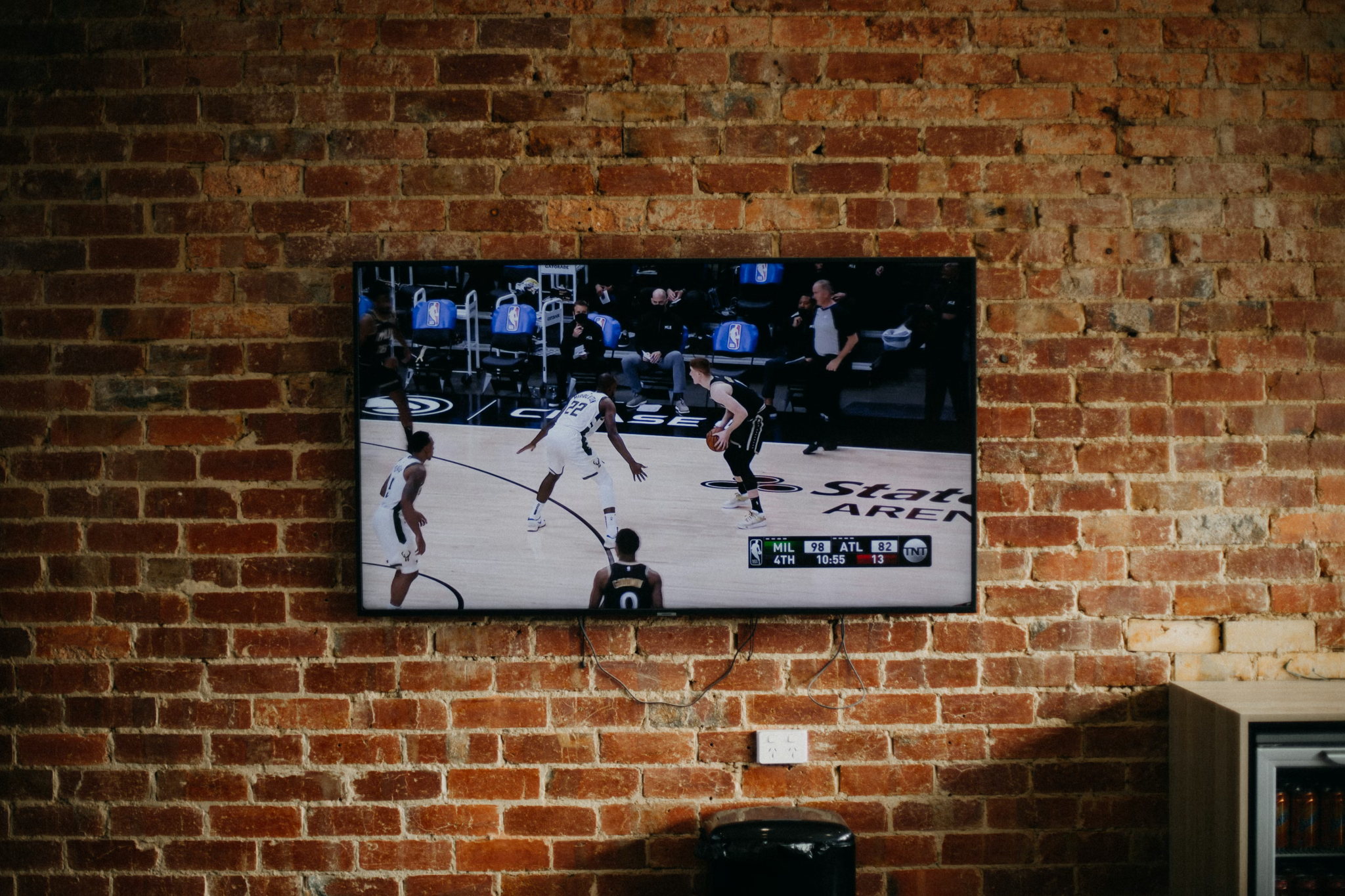
The problem of sports – it generates a lot of data, more than any other kind of entertainment. Because of that, only modern technology was capable of collecting, processing, and visualizing this information fully. In football, optical tracking systems track the movement of each player and the ball dozens of times per second. In baseball, radars record the spin of the ball as it’s pitched. This information is not simply stored in team databases; it’s instantly transmitted to television graphics.
Viewers no longer simply see a player running fast; they see their exact speed displayed on the screen in kilometers per hour. They do not simply see a shot on goal; graphics show the probability of scoring from that position. This type of in-depth analytics satisfies the needs of the most sophisticated fans and geeks.
Along with the development of analytics, sports broadcasts are becoming deeply integrated with the betting industry. For bookmakers, seconds of delay in broadcasts are critical, and viewer engagement directly impacts the volume of live betting. There are a lot of changes that came with the internet and one of them is the ability of sportsbooks to provide people with access to live streams, fully functional apps with statistics of the current event, and instant support in case of any issues. You can see the example of how it works with websites, like Win Bet and others. They allow users not only to follow the game, but also build a community of bettors. Some of them become analysts, while others just have a good time enjoying their hobby. Now people are part of the ecosystem, where they watch the game, analyze it, make their predictions, and are rewarded for that.
Comparing TV Broadcasts and On-Demand Streaming
The advent of OTT technologies, which deliver video content directly to users over the internet, bypassing traditional cable or satellite networks, has forever changed the way people experience major sports events. Platforms such as DAZN, Amazon Prime Video, and specialized league services, like NBA League Pass or F1 TV, have become serious competitors to traditional television.
If you compare traditional TV with modern streaming services, the differences between them come down to more than just the ability to watch multiple events at once.
|
Feature |
Old School TV (Cable/Satellite) |
OTT Streaming (Internet) |
|
Delivery |
Physical cables, dishes, and towers. |
Any internet connection: Wi-Fi, 4G, or 5G. |
|
Availability |
Stuck to the provider’s coverage area. |
Global (as long as you’ve got a signal). |
|
Cool Features |
Almost none. Just flicking through channels. |
Full-on interactive: multi-cam views, live chats, and instant stats. |
|
Hardware |
TV set + a clunky set-top box. |
Phones, laptops, tablets — you name it. |
|
Latency |
Tiny lag (3-5 seconds max). |
Can lag 20-40 seconds behind the actual live action. |
|
Cost |
Fixed channel bundles and annoying ads. |
Subscriptions, Pay-Per-View, and targeted ads. |
|
Reliability |
Rock solid. Millions can watch without the picture dropping. |
Hits or misses. Servers often crash during massive finals like the Super Bowl. |

While you cannot deny the convenience of OTT platforms and how good they look, traditional TV is still much more stable. When the Champions League final or the Super Bowl is on, internet channels are overloaded with people who want to watch the stream. On the other hand, cable delivers a picture without delays or freezes, while streaming services struggle to cope with millions of simultaneous connections.
Artificial Intelligence As a Director
AI technologies are changing the way live broadcasts are created. Machine vision instantly identifies key moments and edits them into highlights. To ensure the highlights are truly captivating, the algorithm even takes into account the stadium’s roar. For local competitions, this is a real lifesaver: robotic cameras operate autonomously. Now, high-quality broadcasts are available even in places where a full-fledged film crew simply cannot afford it.
Economic Impact and Monetization of Broadcasts
The modern reality of live broadcasts does not stop at television. Modern sports are tied to social media, gaming, and advertisements. Thanks to big contracts with the Premier League or the NFL, companies are able to establish a platform to showcase their new products. There are multiple reasons why budgets have gone through the roof recently:
- Ability to reach the audience from any corner of the world. Soccer used to be watched at home. Today, fans in Singapore or New York do not need to search for pirated links, as digital platforms offer 4K-level quality. Global reach has transformed local leagues into global brands for which broadcasters are willing to pay a premium.
- Advertising that knows you. With the transition to online streaming, the era of «one ad fits all» is over. Algorithms now push viewers exactly what they will buy. Personalization makes each ad slot several times more valuable, as its effectiveness skyrockets.
- The magic of augmented reality. Have you noticed the billboards on the stadium walls? A spectator in Beijing sees the characters for local brands, while a fan in Madrid sees an advertisement for a Spanish bank. Virtual advertising replacement technology allows clubs to sell the same physical seat dozens of times to different regions.
While at first sport competitions have been used to showcase the capabilities of TVs, they now change the way people interact with their favorite hobby. It is now a normal situation when the live stream may provide a better experience than a visit to a stadium in real life.
From VAR to Hawk-Eye
VAR in soccer is a prime example of new technologies that impact sports. This whole mess with video replays only started because fans watching on TV could see referees’ mistakes from ten different angles, while referees on the field relied solely on their own vision. Cameras went from being a tool of entertainment to an instrument of justice.
In tennis, the story is even more complex. Television broadcasters invented the Hawk-Eye system for fans to create beautiful 3D graphics and show where the ball landed. But the images turned out to be so accurate that federations were forced to admit that computers see better than humans. Thus, Hawk-Eye became the official referee. A Vicious Circle of Progress
There is an interesting dynamic at work here:
- Sports need high-end cameras to show fast-paced moments.
- Technology is becoming so powerful that it can detect micro-offsides and net touches that the naked eye can’t see.
- Sports are forced to change their rules to comply with this «digital truth».
As a result, broadcast directors and referees now work hand in hand. When people watch VAR replays or listen to referee calls live, sport becomes transparent.